FAQ
About Us
How is Blue Circle Foods different from other seafood companies?
There's a lot to say about this! Here are just a few ways that Blue Circle Foods is different from other seafood companies.
- All of our seafood is sustainably sourced, fully traceable, and third-party audited.
- We're employee-owned.
- We don't use antibiotics, synthetic colors, added hormones, or GMOs in any of our products.
- We don't use tripolyphosphates for plumping our shrimp.
- We love talking about fish farming. We're developing aquaculture as a sustainable practice, not ignoring it as taboo.
- Learn more on our About Us page.
How did you start the company?
Blue Circle Foods was founded in 2005 by a team that included Nora Pouillon, the founder of America's first certified organic restaurant. The company started as a way to source fish for that restaurant.
Who are your farmers?
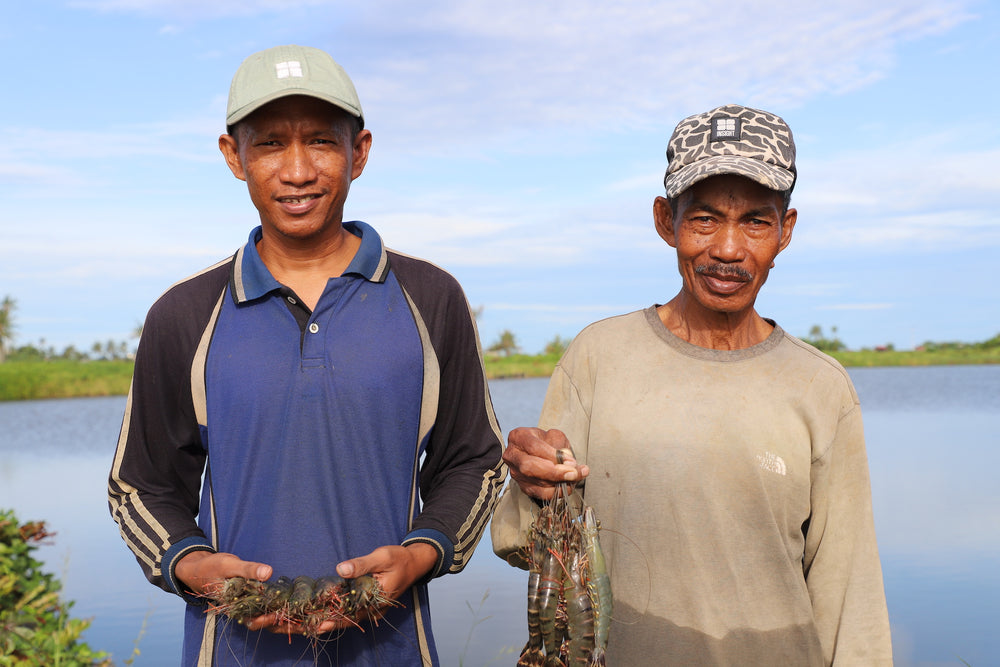
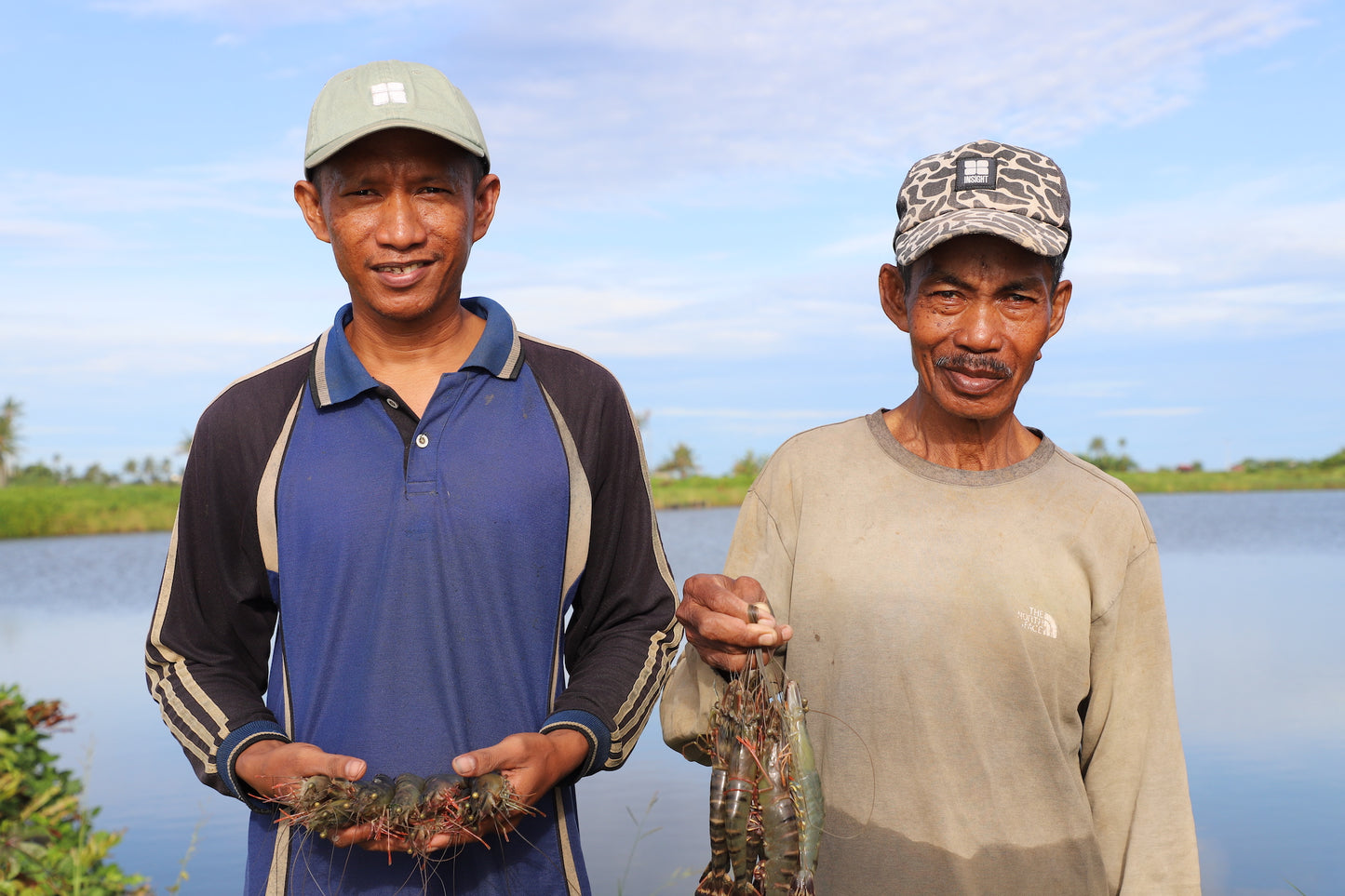
We work with farmers dedicated to protecting the world’s oceans through responsible aquaculture. Our farmers embrace practices that minimize environmental impact such as using fish feed made from eco-friendly ingredients like microalgae, raising fish in spacious, deep-water pens, and farming without use of antibiotics, added hormones, GMOS and harmful chemicals.
Who are your fishermen?
We work with independent native fishermen from the Maldives, Iceland, and Alaska who embrace the highest standards of fishing and fair labor practices to source wild-caught fish from the most sustainable fisheries in the world.
What standards does Blue Circle Foods follow?
We believe in truly sustainable practices and standards that work harmoniously with the environment. We adhere to the standards of environmental protection established by the Monterey Bay Aquarium Seafood Watch, Marine Stewardship Council (MSC), Aquaculture Stewardship Council (ASC), as well as the traceability requirements set forth by Trace Register. We voluntarily agree to third party auditing by the Institute for Marketecology (IMO).
How will sustainably-sourced fish help save wild ocean fish?
Overfishing has a drastic impact on ocean life. The world’s fish stocks are under significant pressure, with 31 percent classified as overfished, and a further 58 percent as fully fished. Responsible sourcing of both well-managed wild and farmed fish reduces the strain on wild populations and helps support a healthy ocean.
Our Farm-Raised Salmon
What is aquaculture?
Aquaculture is defined as the breeding, rearing and harvesting of plants and animals in a variety of water environments. According to World Wildlife Fund’s 2015 Living Blue Planet Report, aquaculture now supplies 58 percent of the fish we eat, has kept the overall price of fish down, and has made protein and improved nutrition more accessible to communities around the world. Responsible aquaculture results in fish that equal the taste and nutritional profiles of wild fish without the potential exposure to environmental toxins.
What do you feed your farm-raised Atlantic Salmon?
We feed our farm-raised Norwegian Atlantic Salmon a marine-based diet that includes wild-caught fish trimmings, herring, microalgae, and other responsibly sourced ingredients to reduce environmental impact.
For every pound of salmon we produce, we take less than half a pound of fish out of the ocean for feed.
Learn more on our About Us page.
Why is what we feed farm-raised salmon important?
Aquaculture, or fish farming, currently provides more than 50% of the world’s seafood, and that number will continue to grow. The Global Aquaculture Alliance predicts that, by 2030, 62 percent of all food fish will come from aquaculture. Fish farming is here to stay, making it critical to implement healthy and sustainable aquaculture practices, including improvements in fish feed.
Traditional aquaculture feed relies on wild fish stocks like herring, mackerel and anchovies to supply marine ingredients such as fish oil and meal. Because of overfishing, these wild fish stocks have become increasingly depleted. Because of pollution, they can also be contaminated with mercury and PCBs.
At Blue Circle Foods, we do a few things to mitigate these problems:
1. All wild fish sourced for feed is from an MSC Certified sustainable fishery.
2. Instead of only using whole fish for feed, we upcycle trimmings from MSC Certified feed fish.
3. We use microalgae in our feed. This shortens the food chain, allowing the Omega-3s and protein from microalgae to to go directly to the salmon, bypassing smaller fish. This allows us to take way less fish out of the ocean for feed.
4. We test our feed and final product fish for the presence of mercury. Our most recent test on Atlantic Salmon was<0.0071 mercury ppm, which is 141x below the FDA allowable limit of 1ppm.
5. We clean our feed to remove PCBs. Furthermore, PCBs are not very soluble in microalgae, which makes up a significant portion of our feed.
Which contains more Omega-3s: wild-caught salmon or farm-raised Atlantic Salmon?
Blue Circle Foods farm-raised Norwegian Atlantic Salmon contains higher Omega-3 content than the average wild salmon. This is due to the quality of our feed, which includes microalgae, the base source of Omega-3s in the marine food chain.
Not all farm-raised salmon is created equal though. If the quality of the feed is low (i.e. grain-based vs marine-based) then the Omega-3s will also be low.
Do you use synthetic colorants in your farm-raised salmon feed?
No. Blue Circle Foods does not use synthetic colorants in the diet of it's farm-raised salmon.
In the wild, salmon swim around eating shrimp, krill, and other marine microorganisms high in carotenoids. Carotenoids are what make carrots orange, flamingos pink, and salmon red.
In a farm environment, salmon are not eating these high-carotenoid microorganisms. In come Panaferd and Astaxanthin.
Panaferd and Astaxanthin are both used in farm‑raised salmon feed to create the characteristic pink‑red color due to their high concentration of carotenoids, but they differ in composition and source.
Synthetic Astaxanthin is a single carotenoid pigment that is directly responsible for salmon coloration and also acts as a key antioxidant for fish health.
In contrast, we use Panaferd. Panaferd is a natural feed additive derived through the fermentation of the marine microorganism Paracoccus carotinifaciens.
Panaferd contains natural Astaxanthin and a broader spectrum of carotenoids - such as adonirubin and canthaxanthin - along with proteins and other nutrients. Because of this, Panaferd functions as a more complex supplement for salmon health, providing pigmentation plus additional antioxidant and nutritional benefits.
Why does it say "natural color added in salmon diet" on your ingredients list?
Both wild and farmed salmon are red in color because of what they eat. In nature, wild salmon eat crustaceans (like shrimp and krill), which contain red-hued carotenoids. Carrots and other orange fruits and vegetables also contain carotenoids. Carotenoids provide vitamin A and are an essential part of a healthy salmon's diet. We use a naturally derived carotenoid called Panaferd in our salmon feed, which of course turns the salmon red! FDA regulations state that we need to call this out by saying "color added".
Does your farm-raised salmon contain mercury or PCBs?
Blue Circle Foods Atlantic Salmon comes from carefully regulated Norwegian farms where, unlike wild-caught salmon, the fish are fed a controlled diet. Because we control what our salmon eat, we can ensure that all ingredients are clean and free of toxins. The most recent mercury test on our Atlantic Salmon showed <0.0071 mercury ppm, which is 141x below the FDA allowable limit of 1ppm.
Online Orders
How do I track my order?
You will receive an email from the carrier with your tracking number once your order has shipped. Please refer to our Shipping Policy for further details. If you’re having trouble locating your order, please contact us hello@bluecirclefoods.com.
Which shipping services and carriers do you use?
We use FedEx and UPS. Please refer to our Shipping Policy and checkout page for rates.
How soon should I expect my shipment?
We prep our product for transit on Wednesdays for Friday delivery via 2-Day Air.
How do you keep products cold during transit?
We use carefully measured dry ice based on the final destination of your package and the number of products in the shipment to keep things cold. Sometimes, the dry ice will dissipate during transit but if none is visible in your box, that’s ok. Use the touch test; if your product is cool to the touch, it is safe to eat or refrigerate for later use.
Are online orders shipped cooled or frozen?
Shipments are sent out frozen with dry ice to keep the products chilled. They may or may not arrive still frozen. Please refer to our Shipping Policy for details.
What should I expect when my package arrives?
When a box arrives, carefully dispose of the dry ice, and unpack the seafood. Our product usually arrives frozen but can become somewhat thawed in transit – if it’s cool to the touch, it’s safe to eat. Everything can be stored in the freezer or fridge, depending on when you’re planning on enjoying it. If placing it in the fridge store toward the back of the fridge and eat within about a week. If freezing, enjoy within about 3-4 months.
What should I do if I need to change or cancel my order?
We do not guarantee cancellations or changes to orders. If you need to change or cancel an order, please email hello@bluecirclefoods.com as soon as possible. Per our Shipping Policy, we are not able to cancel if the shipment has already been processed.
What happens if my package arrives, but something is wrong?
If your order arrived damaged, please reach out to us right away at hello@bluecirclefoods.com with a quick note that includes your order number and an image of the damaged product. Please review our Refund Policy for further details about our process.
Do you offer a gift note service for online orders?
No, we do not offer a gift note service at this time. Thank you for your understanding.
Do you ship outside of the United States?
No, we do not ship outside of the United States.
Quality Assurance & Food Safety
Where can I find the lot number of the product?
The lot number can be found on the back of the packaging near the bottom edge.
Where can I find the expiry date of the product?
The expiration dates for our products can be found on the back of the packaging, either printed onto the packaging or stickered on.
Are your frozen filets and shrimp safe to consume raw?
We do not recommend consuming our frozen filets or shrimp raw.
Availability
Where can I find Blue Circle Foods products?
Blue Circle Foods products are sold in fine retailers across the United States. Please use our Store Locator to find a store near you.
Where can I find Changing Seas products?
The Changing Seas brand is sold exclusively at Whole Foods Market locations nationwide. Please use our Store Locator to find a store near you.
Ingredients & Allergens
Do you use antibiotics, added hormones, or GMOs?
No. We do not use antibiotics, added hormones, GMOs, pesticides, or anti-foulants.
Do your products come into contact with peanuts or tree nuts during processing?
No. Blue Circle Foods and Changing Seas products are produced in facilities free of peanuts and tree nuts.
Do your products come into contact with gluten, dairy, or eggs during processing?
All Blue Circle Foods and Changing Seas products are gluten-free except for our Ginger Sesame Shrimp Burgers (soy sauce).
All of our products are produced in facilities free from dairy and eggs.
Are your fish and shellfish products produced in the same facility?
No. Blue Circle Foods and Changing Seas fish and shellfish products are produced in separate facilities. There is no risk of cross-contamination.
Does your smoked salmon contain added sugar?
Unlike most other brands, Blue Circle Foods Smoked Salmon contains no added sugar. We use superior technique and quality fish to overcome the need for excessive salt and added sugar.
Is your smoked salmon Kosher?
Yes. Blue Circle Foods and Changing Seas smoked salmon have Kosher certification.